


Cooperstown Valley - Part 1 - "Millions of years in the making"
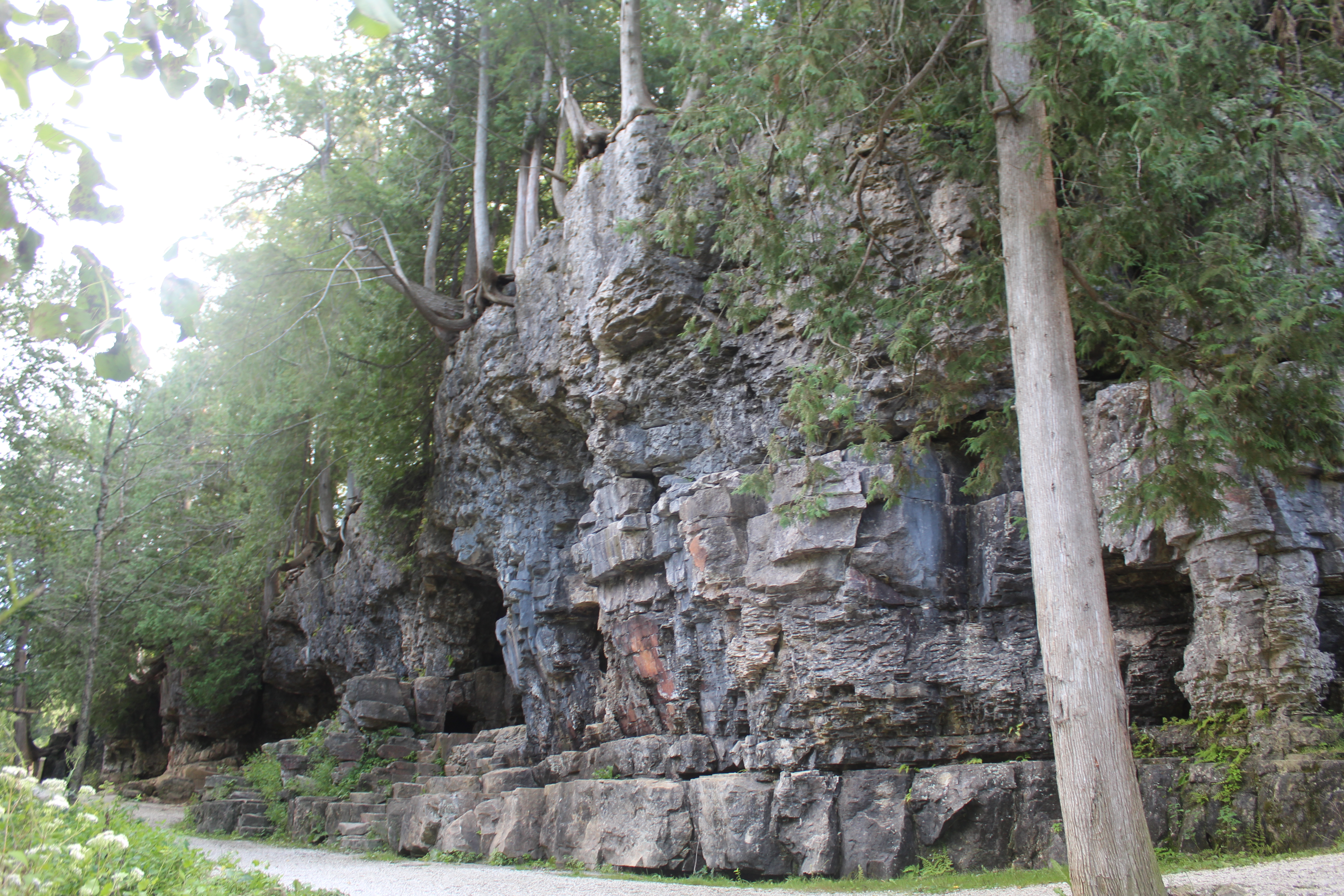
The rocky bluffs at Cherney Maribel Caves County Park are a sight to behold and feature a series of caves which contain valuable insights into the area's prehistoric past.
By Jacob Heiser
The Denmark News
When you travel south of Cooperstown on County Highway R, you suddenly descend into a wooded river valley noticeably different from the rolling farmland you just left behind. This area, lined by the West Twin River to the east and the Devils River to the north, has a rich and storied history dating back to the earliest European settlers as well as an active and vibrant present with much still to offer. Over the next two months, each issue of The Denmark News will feature an article detailing a different piece of the story that makes up this area in an attempt to preserve and share the past and to discover what has kept people coming back for generations.
To begin our chronicle of what we are dubbing the "Cooperstown Valley", we decided to learn more about the area's complex geology, particularly that of its most notable natural feature--the Maribel Caves. For well over a century, the caves have been a destination for adventurers, tourists and, more recently, scientists. The series of caves stretch along a large bluff on the western side of the West Twin River and are now part of Cherney Maribel Caves County Park. Currently, the caves are cared for by members of the Wisconsin Speleological Society (WSS) who provide tours of New Hope Cave on the third Sunday of every month from May through October.
Since no one at The Denmark News is what would be considered an expert in the field, we reached out to UW-Green Bay Geoscience Professor John Luczaj to get some insights on the geological history of the caves and what makes the area special. As it turns out, Professor Luczaj has studied the caves and previously worked with another professor and the WSS to publish an article on the geological history of New Hope Cave in 2008. He was kind enough to speak with us last Thursday.
What this reporter was most surprised to find out is, despite popular belief, the Maribel Caves are not part of the Niagara Escarpment. Professor Luczaj explains while the local rock formations are part of the Niagara Cuesta, they are not a part of the escarpment as often claimed. A cuesta is a gently sloping plain bounded on one edge by an escarpment. While the Niagara Escarpment's cliffs can be seen locally at places like High Cliff State Park, it is not the source of the scenic features at Maribel Caves. Luczaj says the rock outcrops at Maribel Caves would exist "whether or not the Niagara Escarpment existed".
According to Professor Luczaj, the rock formations that can be seen at Maribel Caves are made of dolomite which formed during the Silurian Period of the Paleozoic Era or around 430 million years ago. Dolomite is a sedimentary carbonate rock that contains high amounts of minerals and is often misidentified as limestone. Luczaj told us the caves in the area posited to have "formed millions or even tens of millions of years ago, long before the glaciers". He explains dolomite, like limestone, is a carbonate rock susceptible to acid rain which would dissolve the rock on the surface and run down vertical cracks. There, the acidic rain water would mix with ground water and create a solution that would dissolve surrounding rocks creating caves. Over tens of thousands of years, subglacial ground water moved sediment through the caves leaving evidence behind for experts to study. Luczaj explains mud cracks that can be seen in the dolomite on the ceiling of the caves are remnants of "ancient tidal flats", and the entire area was part of a shallow ocean at one time.
According to Professor Luczaj, the areas surrounding the caves are "edges of an ancient bedrock river valley" that was further formed by glacial activity. He says the West Twin River is a pre-glacial river valley with some branches now concealed by over 100 feet of sediment in some areas. When the glaciers came, they sculpted the landscape and deposited sediment. This is why, locally, the West Twin River resembles a tiny stream that does not match the size of the larger river bed. Luczaj says this is because the river is "very old and plugged up with glacial sediment".
Professor Luczaj says the Maribel Caves area is a "really neat place" that has a "complicated history that started millions of years ago". He adds, "I'm glad it is a county park, I personally believe it should be a State Park," and, "From a standpoint of our history, it is a valuable area and an interesting place to educate the public in our area." He praises the work of the WSS members stating they are "volunteers who are engaged and excited". While the area may not be unique, Luczaj says it is "special for our area".
While the formations found in the Cooperstown Valley may not be what is considered “unique” from a geological standard, they still are truly a sight to behold and have been a popular attraction for tourists, explorers and naturalists for generations. They contain clues and benchmarks that help us unravel the past and have had a great deal of impact on the surrounding area over the years. Over the next few weeks, we will share stories of history and industry, of growth and decline and of exploration and preservation as we attempt to unravel the past and present of the Cooperstown Valley.
Editor's Note: Next week, we will feature the second article in our Cooperstown Valley series detailing the dedicated work of the Wisconsin Speleological Society in the Maribel Caves through an interview with one of its members.
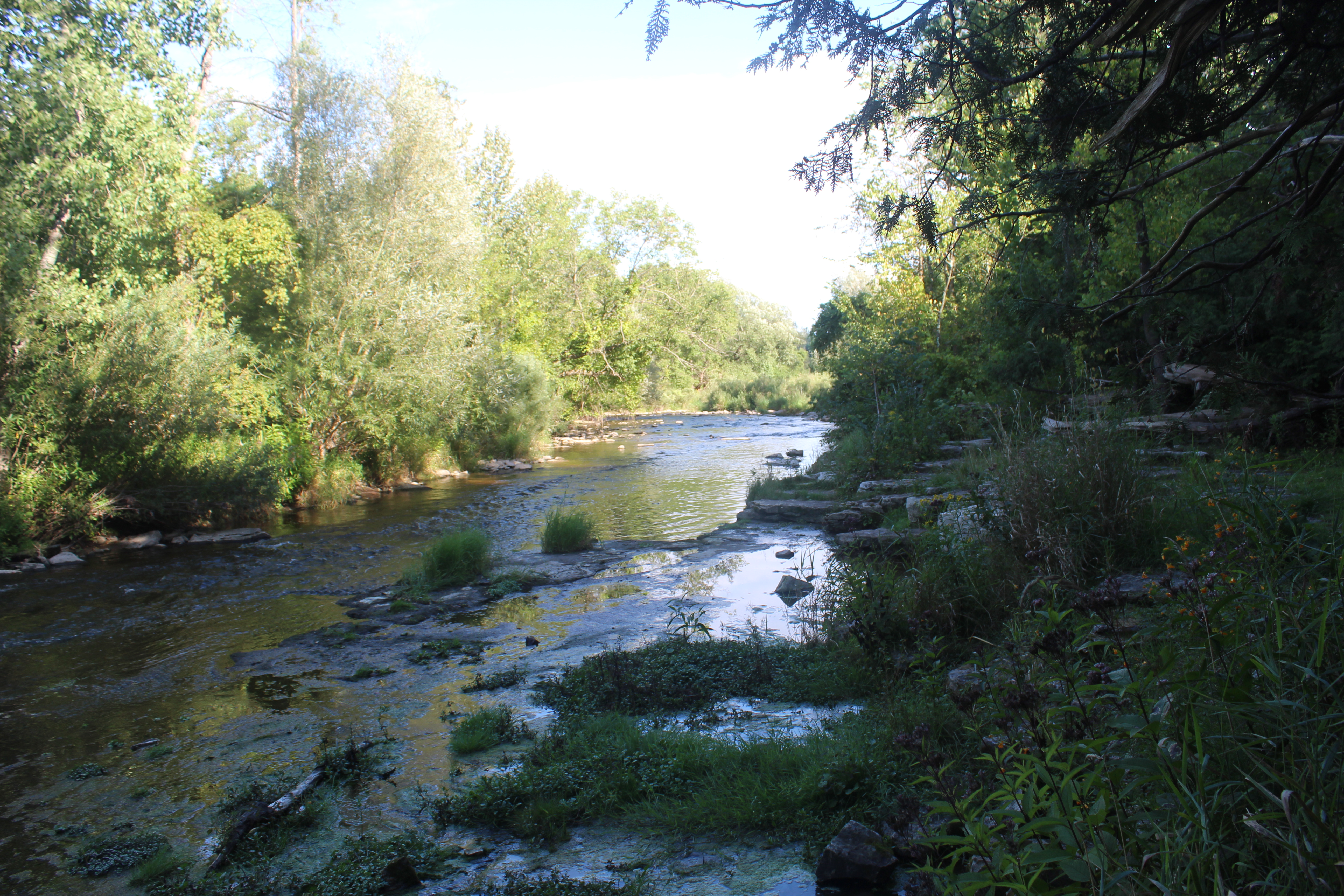
The current West Twin River is much smaller and tamer than the once mighty pre-glacial waterway.
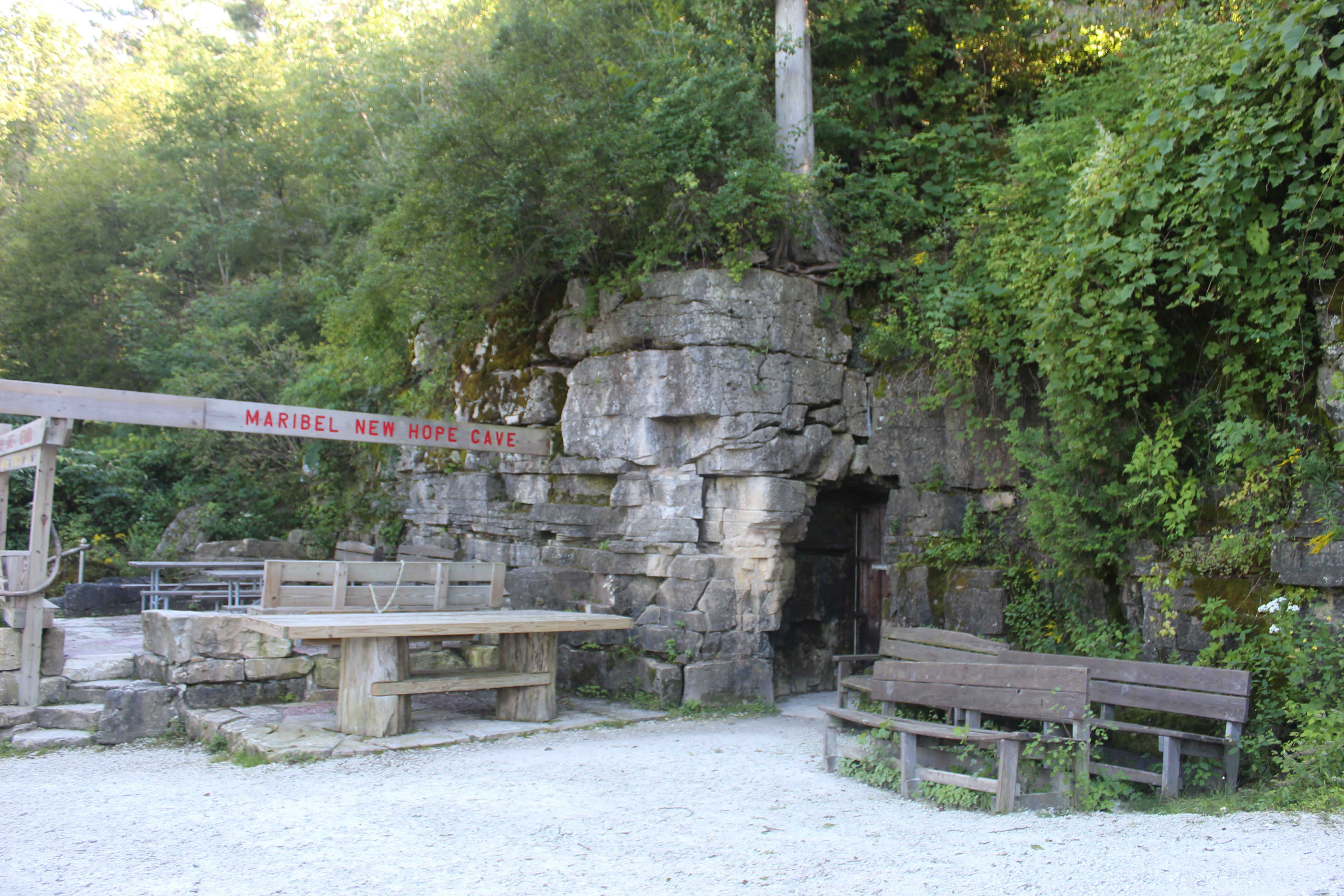
New Hope Cave is the most excavated cave on the property with members of the WSS offering free tours to the public on the third Sunday of each month from May through October.
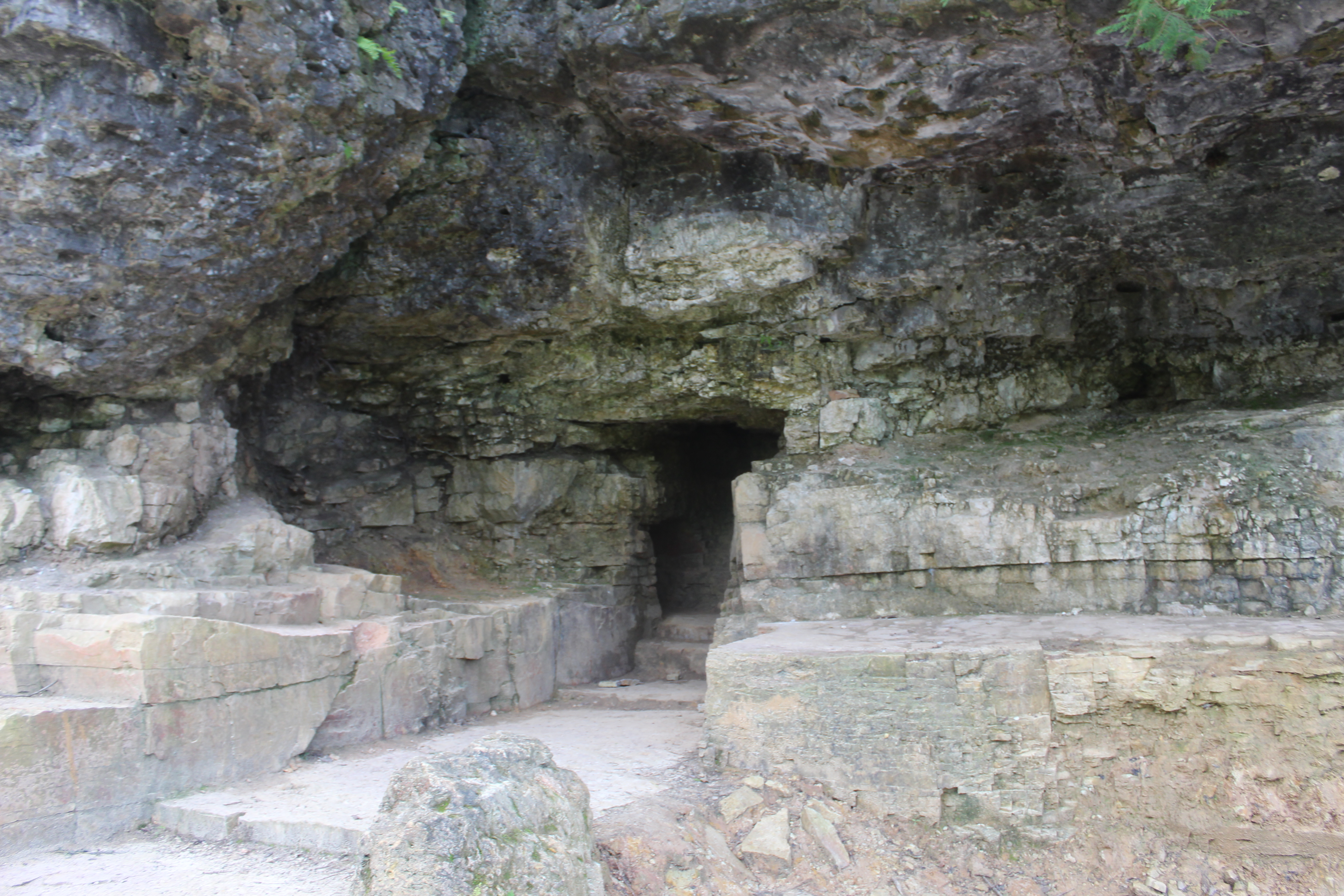
Throughout the park, cave entrances beckon adventurers and naturalists alike.